AIRES Observatory
Applied research on the artificial intelligence market. Regular reports, tool analysis, and AI ecosystem signals from Europe, Spain, and the rest of the world — with no sponsors and no conflicts of interest.
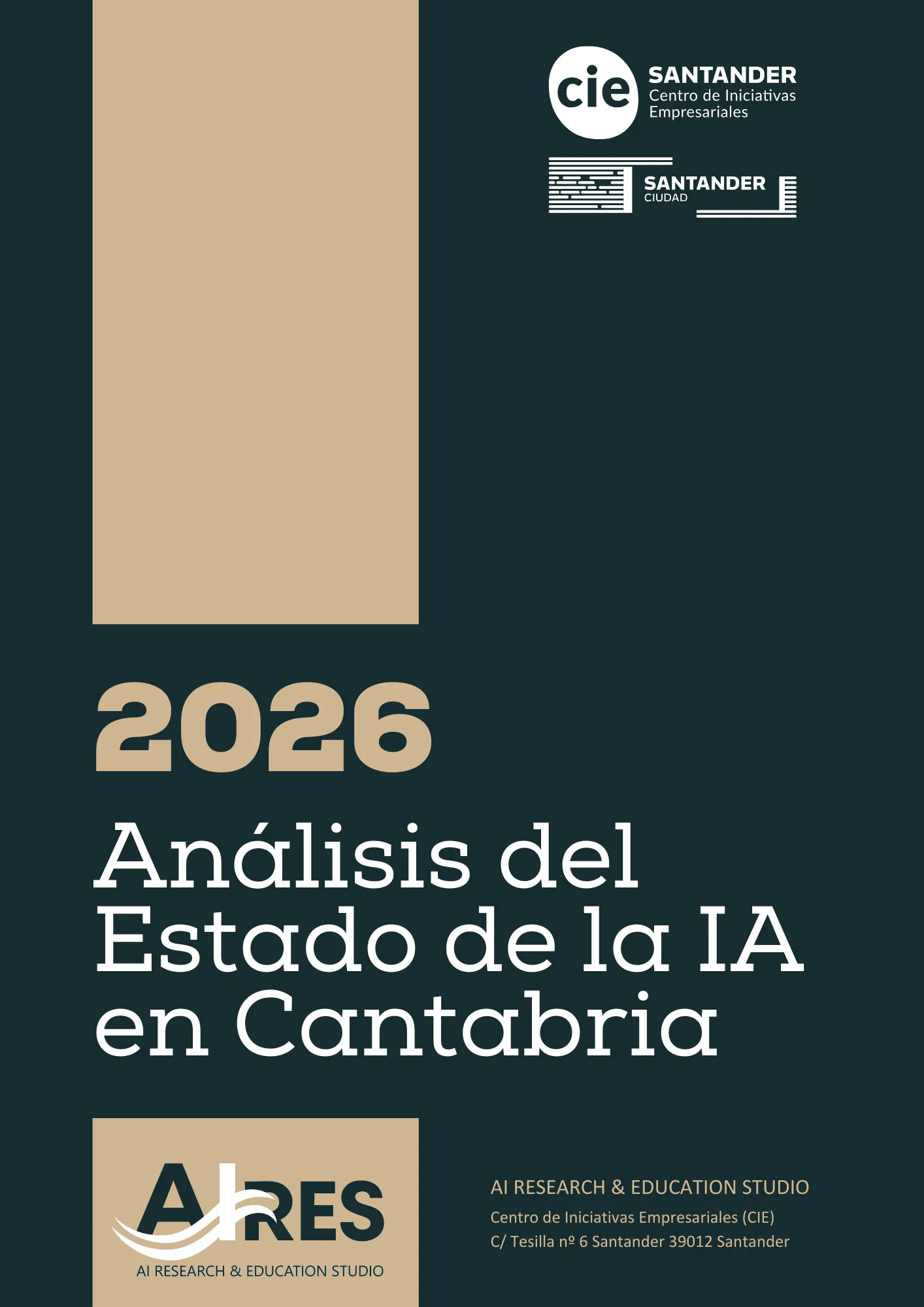
El Primer Informe del Estado de la IA en Cantabria 2026
Our first State of AI in Cantabria report: a realistic, data- and interview-based picture of how far businesses in Cantabria have adopted artificial intelligence, how mature they are, and what financial return they get from it. The point isn't to measure the hype — it's to pinpoint which AI works, where it adds value, and which barriers are holding back its real impact.
Most companies in Cantabria show growing interest in AI, especially in automation, advanced analytics, and generative AI. Yet only a minority currently achieve clear, sustainable financial returns. AI is still seen more as a future promise than as a lever for results today.
- Cantabria ranks fifth among Spain's autonomous communities by share of AI specialists
- Sector analysis: industry, tourism, dairy, logistics, and healthcare
- Comparison with the Spanish national average and the European context
- Adoption gaps and opportunities identified by sector
Ecosystem trends and signals
We track how the AI ecosystem evolves through primary sources: scientific research, investment flows, talent, and real-world deployment — systematically separating genuine technical progress from media noise.
- How AI system capabilities are evolving, and what that means for business applications
- The gap between expected adoption and actual deployment in Europe
- Investment flows, talent movements, and labor demand as leading indicators
Capability assessment
Comparative analysis of AI solutions for enterprise use, judged on performance, total cost, data sovereignty, and fit with the European regulatory framework.
- Cost versus performance across deployment models
- Data sovereignty and regulatory compliance as selection criteria
- Integration and scalability patterns in midsize and large organizations
- Technical and operational risk assessment in enterprise adoption
Regulation, geopolitics, and digital sovereignty
AI isn't neutral. We follow the EU AI Act and the geopolitical map of data: who controls the models, where information is processed, and which legal frameworks define how much room organizations have to act.
- Timeline of regulatory obligations and risk thresholds by system type
- Technology dependence and the global concentration of power in AI
- The European data sovereignty framework and what it means for European organizations
AI in European business
Analysis of the business landscape in Europe, with a focus on Spain: maturity levels, adoption gaps, and documented opportunities for financial impact by sector and type of organization.
- AI maturity map by sector
- Structural and organizational barriers holding back adoption
- Examples of measurable financial impact
AI agents and automation
Where research and deployment stand on autonomous systems that automate complex processes: feasibility criteria and the conditions for success in real production environments.
- Agent architectures: feasibility criteria and cases validated in production
- Metrics for evaluating performance and return in real-world settings
- Risk factors and the organizational conditions needed for success
Strategy, education, and training
How organizations define their AI positioning and build the in-house capabilities to deliver on it — with governance, investment, change management, and literacy as critical adoption factors.
- AI governance models: prioritization and investment criteria with proven impact
- Digital skills gaps and AI literacy in the labor market
- Executive education and upskilling as levers of organizational transformation
Want to receive the reports?
We send the Observatory's analysis straight to your inbox. No mass newsletter — just companies and professionals who want real intelligence on the AI market.